
Beer Can, Asparagus, and Mussel Shells, 2024, 10.5 x 9.5 inches, oil paint on photo book pages

Clam Shell, 2024, 10.5 x 9.5 inches, oil paint on photo book pages

Hanging Buffel Heads, 2024, 10.5 x 9.5 inches, oil paint on photo book pages

Hyacinths and Dobson Fly, 2025, 10.5 x 9.5 inches, oil paint on photo book pages

Oysters and Insect, 2025, 10.5 x 9.5 inches, oil paint on photo book pages

Pomegranate, 2025, 10.5 x 9.5 inches, oil paint on photo book pages
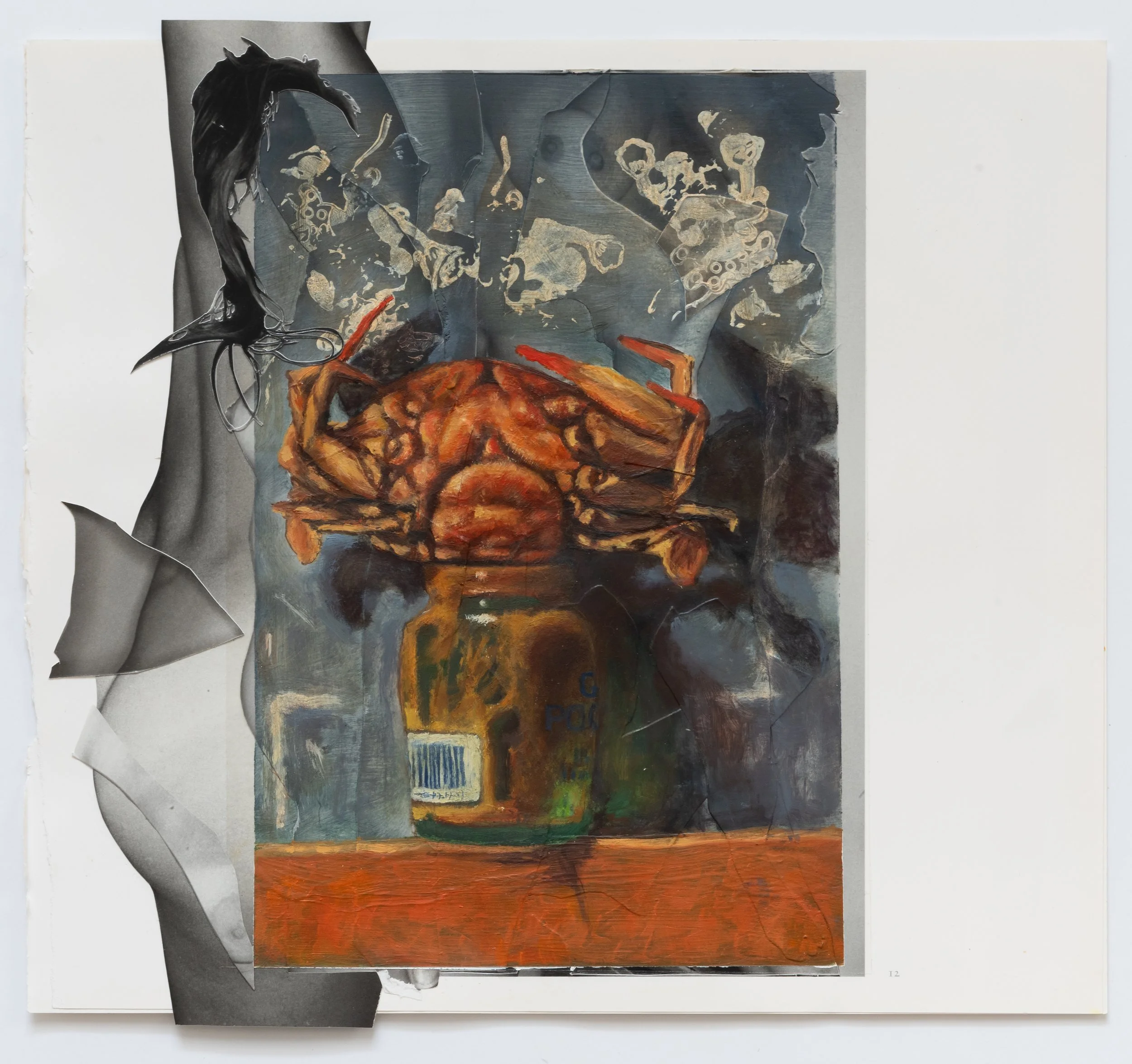
Mustard Jar Crab, 2025, 10.5 x 9.5 inches, oil paint on photo book pages

Trout and Fly, 2025, 10.5 x 9.5 inches, oil paint on photo book pages

Bananas, 2025, 13 x 10 inches, oil paint on dibond with collaged book pages

Green Apples, 2025, 13 x 10 inches, oil paint on dibond with collaged book pages
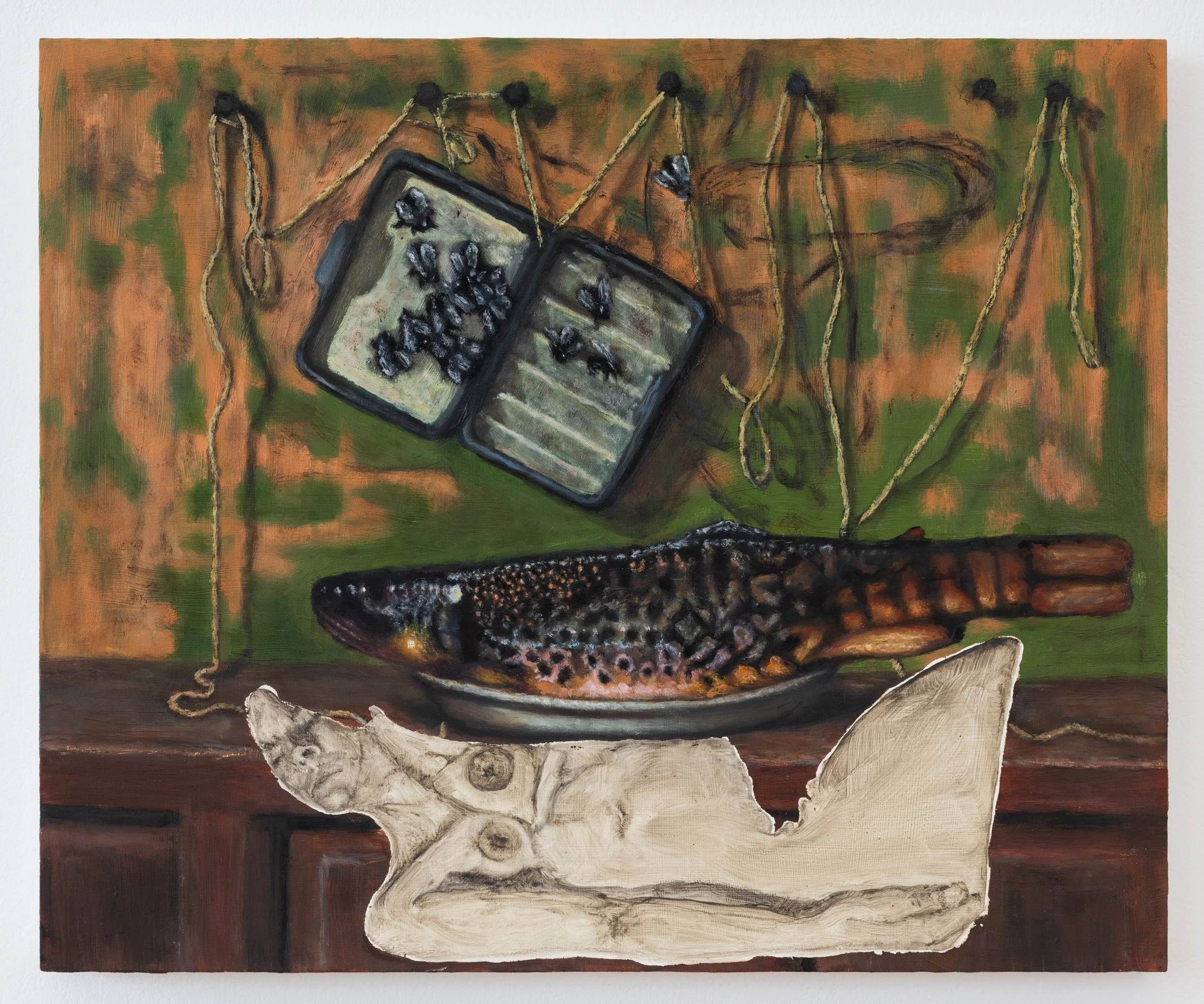
Trout, 2026, 12 x 13 inches, oil paint on dibond

Field Daisies in Vase, 2026, 13 x 10 inches, oil paint on dibond
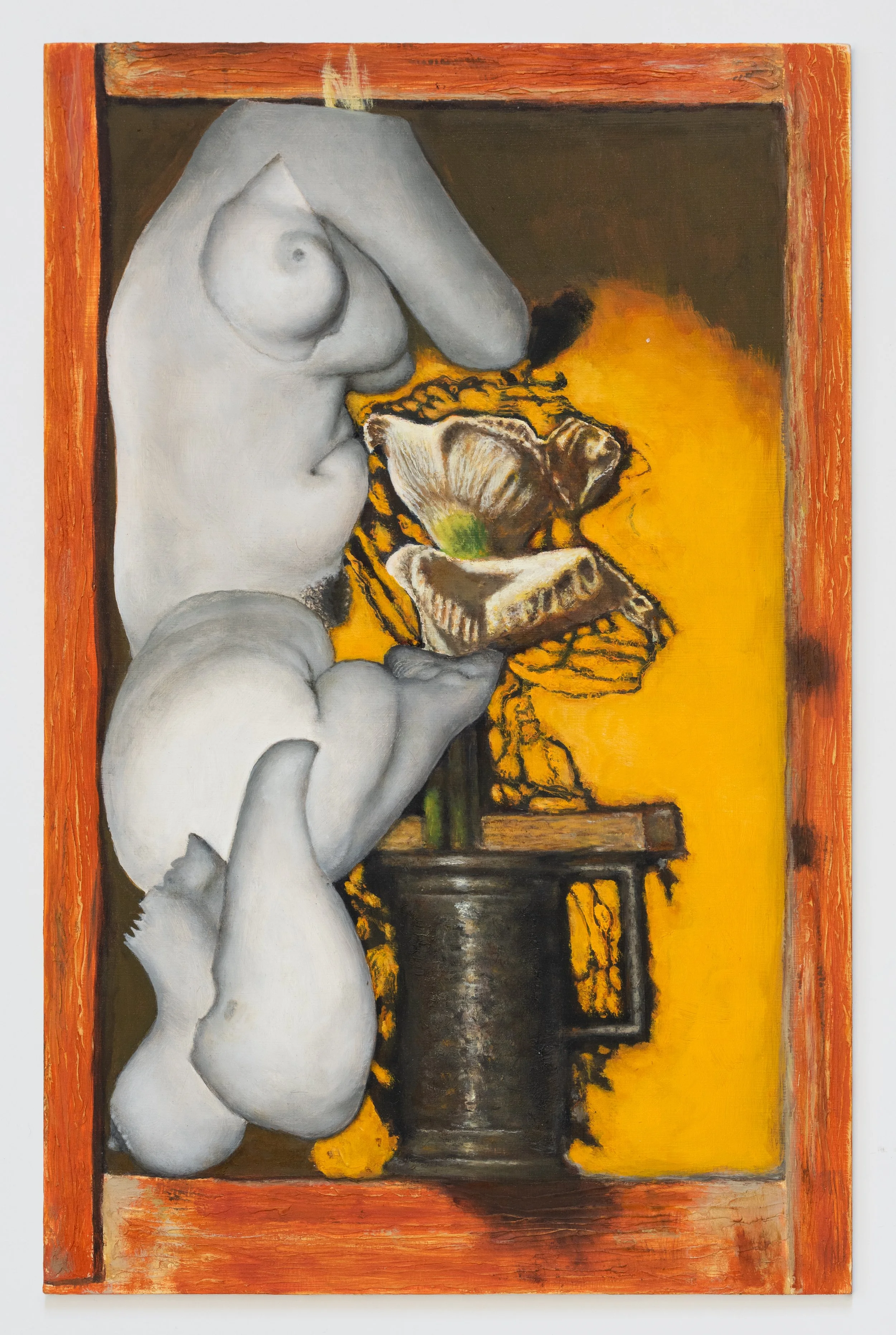
Still Life with Flowers (Troubled Peto), 2026, 14 x 9 inches, oil paint on dibond

Eggplant and Dragonfly, 2025, 12 x 8.5 inches, oil paint on dibond with collaged book pages
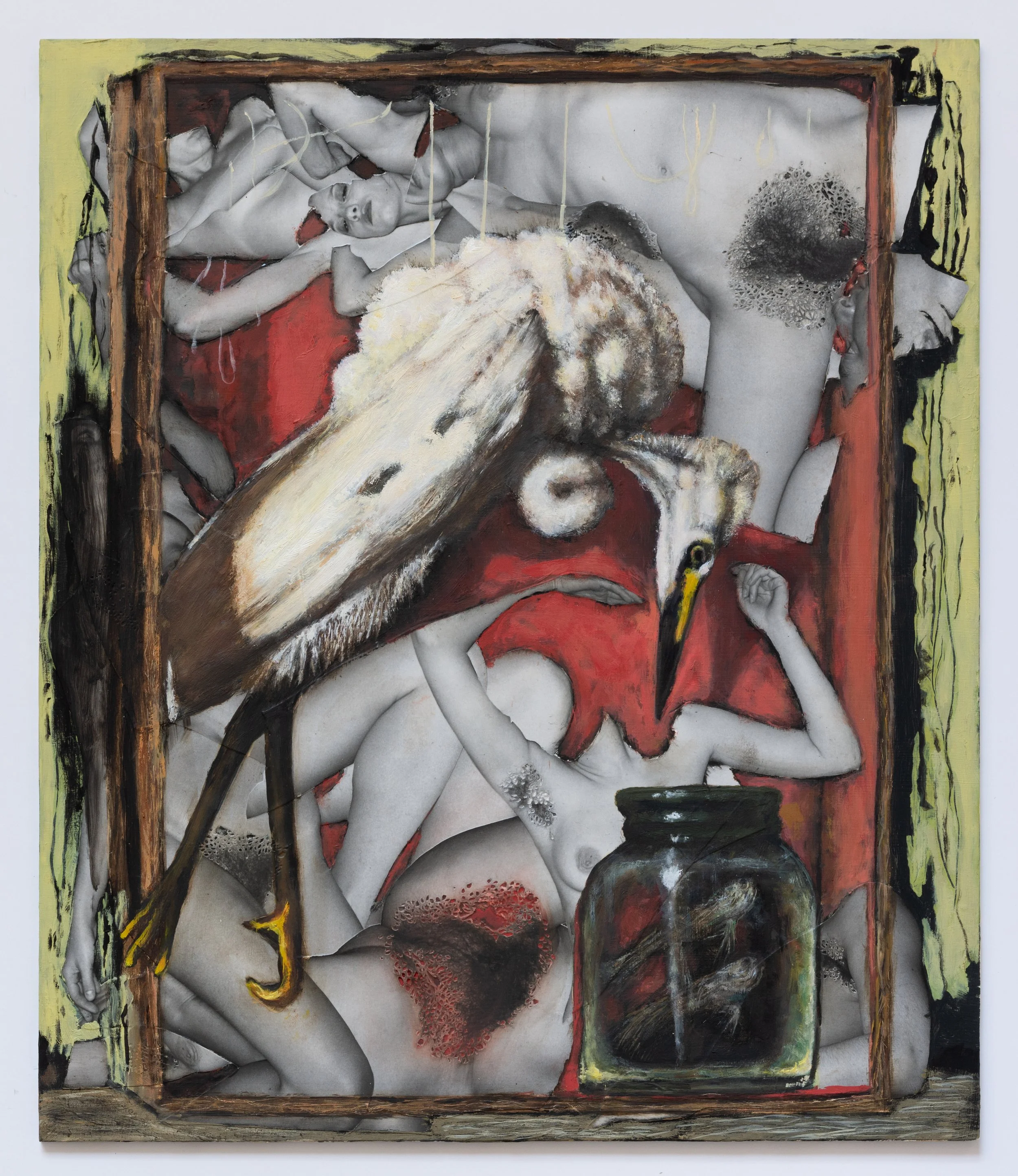
Small World, 2025, 15 x 12.25 inches, oil paint on dibond with collaged book pages

Still Life with Squash, 2026, 15.25 x 12 inches, oil paint on dibond

Hanging Chicken, 2025, 16 x 12 inches, oil paint on dibond with collaged book pages

Meat and Wild Apples, 2026, 10 x 12 inches, oil paint on dibond

Still Life with Pear and Asparagus (Graffiti after Vita Kurland), 2026, 11x10 inches, oil paint on dibond

Squash Drake, 2026, 14 x 12 inches, oil paint on dibond
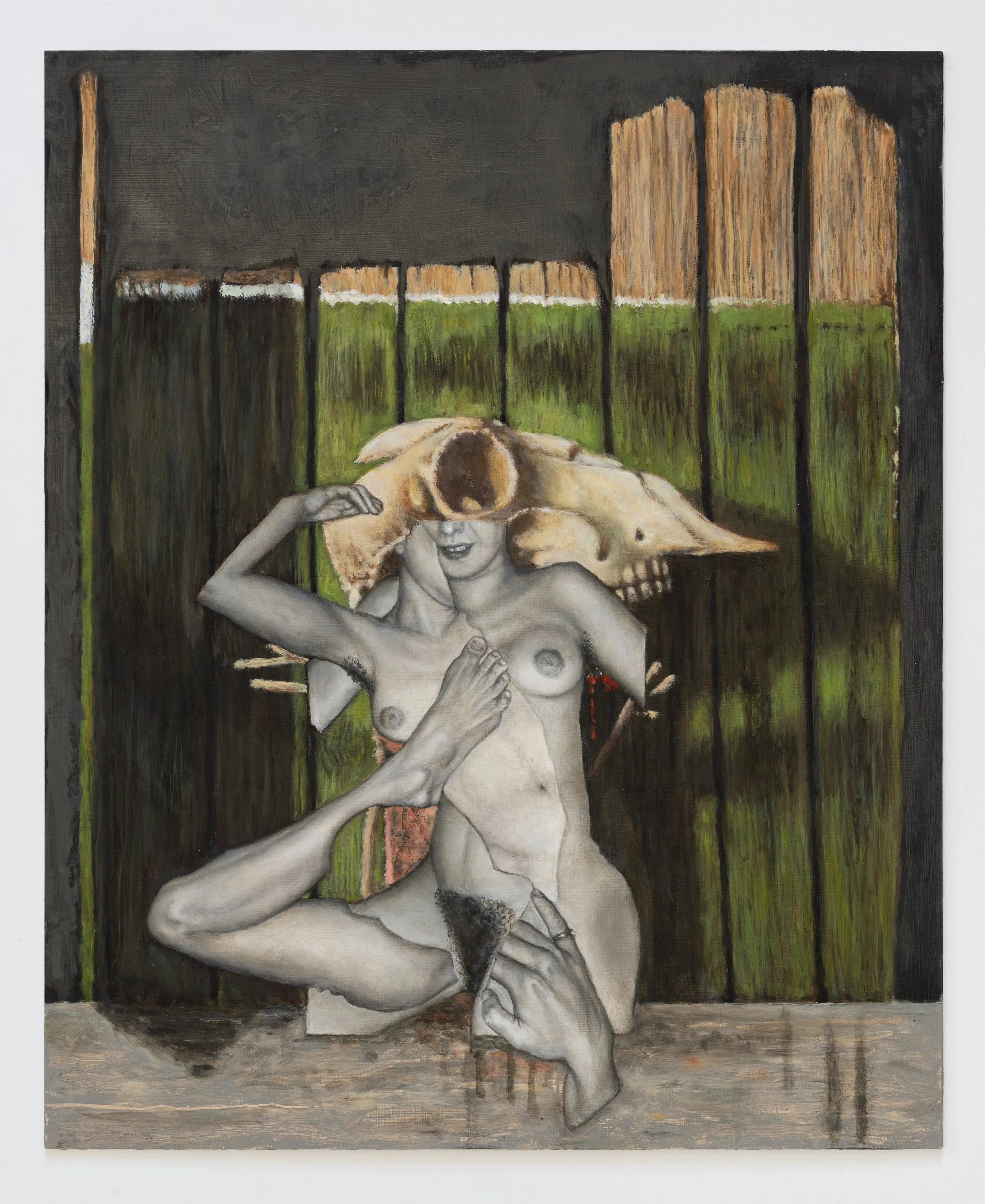
Still Life with Skull and Brick, 2026, 19.25 x 15.75 inches, oil paint on dibond
Bad Hand (2024-ongoing)
Justine Kurland’s series Bad Hand consists of eighty-five oil paintings that replicate still lifes by her late father, Bruce Kurland, and combine them with collaged interventions cut from photographer Lee Friedlander’s book Nudes. The appropriated still lifes are painted onto a background of collaged book pages or over aluminum panels papered with fragments from Nudes. In the last seventeen paintings, Kurland’s photocollages are painted in her own hand.
Kurland’s father, a largely unknown still-life painter, died more than ten years ago. Her parents met in the ’60s at art school, but Kurland’s mother was forced to quit painting when she found herself the sole caretaker and provider for the couple’s three children. Eventually her parents’ relationship ended in divorce and estrangement. Kurland’s father rejected the gallery system, as well as institutions or publications that might have supported him. Instead, he chose to live in isolation to maintain his practice, making a few paintings each year and living off what little money he made from selling his work directly to collectors.
Lee Friedlander’s Nudes was published on the occasion of a solo exhibition at MoMA in 1991, his third at the museum to date. In the press release for Nudes, curator John Szarkowski described the undressed white women in the photographs as “carnal and friendly.” The photographs can be decoded as a set of instructions—recline, bend over, contort—given before their subjects were hit with the flash and committed to canonized photographic memory.
In this series, Kurland uses the embodied, messy, willful practice of painting to revise the archives of her patriarchal inheritance—both the one her father left her and the one she received from the photographic canon. She disturbs these legacies, infecting the original sources with her own hand and allowing a female imaginary to flourish in layer after layer of pigment and photocollage. Kurland further contaminates her sources by scrambling genres, merging the objectification of women’s bodies and the painted vanitas so that metaphors of life and death coexist with everyday insults and fantasies.
While Kurland never formally studied painting, she nonetheless metabolized her father’s process as a child. In order to make this series, she studied his technique with a forensic eye, retracing his steps brushstroke by brushstroke. The resulting paintings alternately conjure his presence and displace it, allowing a new form to take shape in the space between original and copy. In this way, the conversation between father and daughter is analogous to the very process of art-making, the flow of making and unmaking moving from one hand to another.